World Development Report 2026: The Promise of Artificial Intelligence - Stanford Graduate School of Business
High confidence: full text extraction produced 5664 characters.
World Development Report 2026: The Promise of Artificial Intelligence
Event Agenda
Registration and Breakfast
Welcoming Remarks
Katherine Casey, Faculty Director, King Center on Global Development, Stanford University
Somik V. Lall, Director of Strategy, Office of the World Bank Group Chief Economist
Presentation of Main Findings, World Development Report 2026
Gaurav Nayyar, Director, World Development Report 2026, World Bank Group
Panel Session 1: AI as a General-Purpose Technology
AI is a general-purpose technology, or GPT. That puts it in rare company with steam power, electricity, computers, and the internet. Each transformed entire economies, and did so through incremental innovation over decades, where changes in one sector enabled and incentivized changes in other sectors. AI is following a similar pattern. This session will explore the implications of AI as a GPT, focusing on what determines the pace of change for different types of impacts and how country policy builds on an understanding of the drivers of timing and bottlenecks to change.
Presenter: Susan Athey, Co-Academic Lead for the World Development Report 2026 and The Economics of Technology Professor, Stanford Graduate School of Business
Presenter: Christopher Tonetti, Associate Professor, Stanford Graduate School of Business
Coffee Break
Panel Session 2: How Will AI Impact Jobs and Productivity?
AI is reshaping pathways of growth, productivity, and jobs. With most people employed in manual rather than cognitive work in developing countries, the immediate impact of AI adoption is to complement rather than displace workers. Over time, as complementary factors—infrastructure, skills, institutions, and venture capital—develop, AI can enable productive businesses to grow. In the absence of the right complementary factors, however, AI may widen gaps in productivity between developing countries and high-income countries, where rates of AI adoption are higher. This session will explore how AI has been impacting labor markets, including a presentation of survey results on how firms are using and adopting AI.
Presenter: Elwyn Davies, Co-author of World Development Report 2026 and Senior Economist, Trade, Competitiveness, and Business Group, World Bank Group
Presenter: Ufuk Akcigit, Co-Academic Lead, World Development Report 2026, and Deputy Chief Economist and Director of Private Markets, Development Economics, World Bank Group
Moderator: Gaurav Nayyar, Director, World Development Report 2026, World Bank Group
Lunch
Panel Session 3: How Can AI Improve the Delivery of Public Services?
AI can help government officials do their jobs better, address shortages of skilled workers who interact directly with citizens, and make a variety of back-office government functions far more efficient. However, many governments face obstacles to using AI widely, often lacking clear information on which AI tools to choose, how to buy them, and how to implement them effectively. This session will explore how governments can use AI to improve their services on both the back end and front end, including a presentation of survey results on how governments are currently using AI worldwide.
Presenter: Anja Sautmann, Co-author of World Development Report 2026 and Senior Economist, Development Research Group, World Bank Group
Presenter: Joshua Blumenstock, Chancellor’s Professor, U.C. Berkeley School of Information and the Goldman School of Public Policy
Moderator: Gaurav Nayyar, Director, World Development Report 2026, World Bank Group
Fireside Chat: Navigating AI’s Opportunities and Risks in Developing Economies
AI is transforming economies, societies, and public services at a pace unprecedented in previous technological revolutions. It has the potential to expand access to knowledge and expertise, increase productivity, improve service delivery, and help countries address pressing development challenges. At the same time, realizing these benefits will require policies that ensure that the gains from AI are widely shared and that the risks are safeguarded against. Join us for a fireside chat to discuss some of these policies that developing countries will need to put in place to realize the benefits of AI.
Indermit Gill, Former Chief Economist and Senior Vice President of the World Bank Group
Moderator: Somik V. Lall, Director of Strategy, Office of the World Bank Group Chief Economist
Coffee Break
Fireside Chat with Andrew Ng: Making AI Work for Development
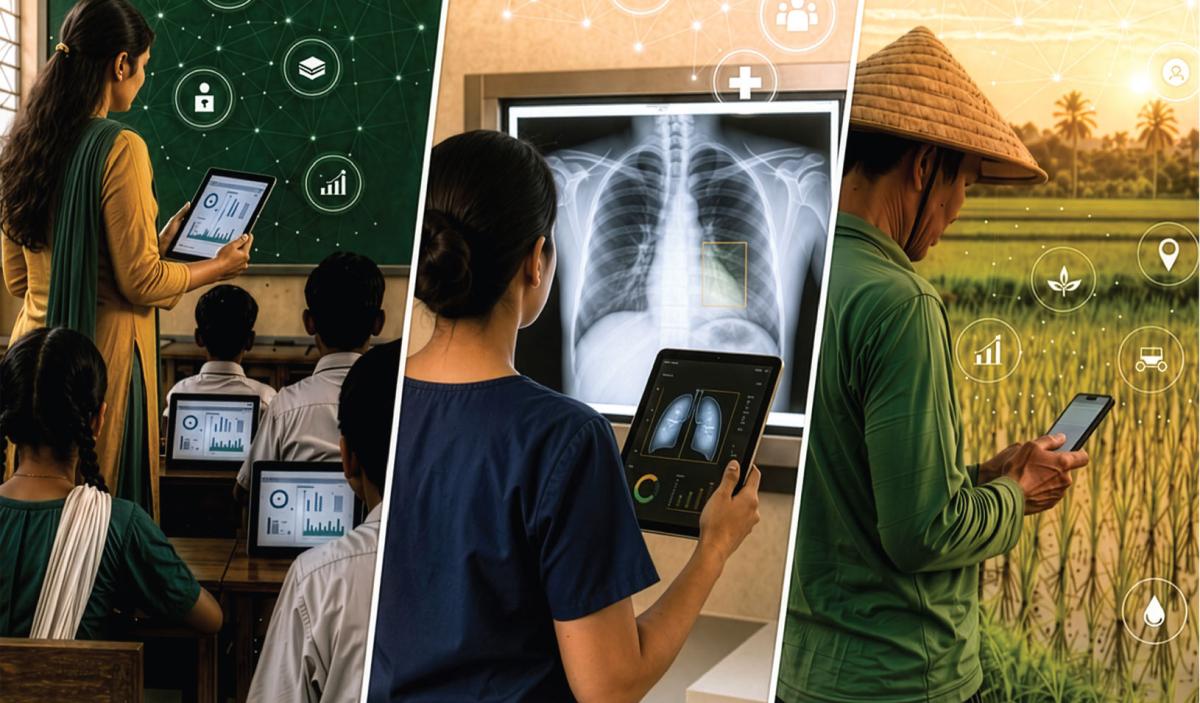
AI is changing the skills that matter, from software engineering to other sectors. This creates opportunities for workers around the world. In parallel, falling costs of accessing AI and improvements in voice interfaces make it easier for developers to build applications that reach individuals and small businesses with limited connectivity, literacy, or digital skills. Join us for a fireside chat with Andrew Ng, founder of DeepLearning.AI, managing general partner of AI Fund, and co-founder and chairman of Coursera. A pioneer in machine learning research and online education, Dr. Ng has taught AI to more than eight million people. The conversation will discuss how governments and institutions such as the World Bank can better coordinate with startups so that developers can tailor their work toward products in education, health, and agriculture that have the potential to be adopted and positively impact the people they are meant to serve.
Andrew Ng, Founder, DeepLearning.AI, and Adjunct Professor, Stanford University
Moderator: Susan Athey, Co-Academic Lead for the World Development Report 2026 and The Economics of Technology Professor, Stanford Graduate School of Business