OpenAI’s agent hacking Australia is a warning for governments everywhere - Scientific American
High confidence: full text extraction produced 3370 characters.
On Wednesday Australia’s prime minister revealed that an OpenAI agent hacked into a government health care platform—and that OpenAI took months to inform Canberra about the breach.
Should these kinds of events continue to occur—or if they’ve already happened—they point to a need for stronger controls on private and sensitive data collected and stored by governments and other institutions. “This is a warning for governments and their IT staff to bolster security,” says Rajesh Veeraraghavan, a professor at Georgetown University’s School of Foreign Service.
Addressing reporters at the United Nations General Assembly (UNGA) in New York City on Wednesday, Australian prime minister Anthony Albanese said, “The AI agent accessed both public and non-public files.” An investigation is underway as to whether other government systems were accessed, if any, he said.
On supporting science journalism
If you're enjoying this article, consider supporting our award-winning journalism by subscribing. By purchasing a subscription you are helping to ensure the future of impactful stories about the discoveries and ideas shaping our world today.
The Australian government was alerted to the incident on September 10, but Albanese said the hack occurred months before, on June 18, when an internal OpenAI model was tasked with researching public health spending. OpenAI became aware of the breach in August, according to the prime minister, and proceeded to wait more than a week before it alerted the Australian government through a generic public e-mail—not through any official channel for cybersecurity reporting and disclosure. As a result, the government was further delayed in learning of the event, Albanese said.
“Early evidence here seems to suggest that there was at best some communication challenges,” says Michael Horowitz, a political science professor at the University of Pennsylvania.
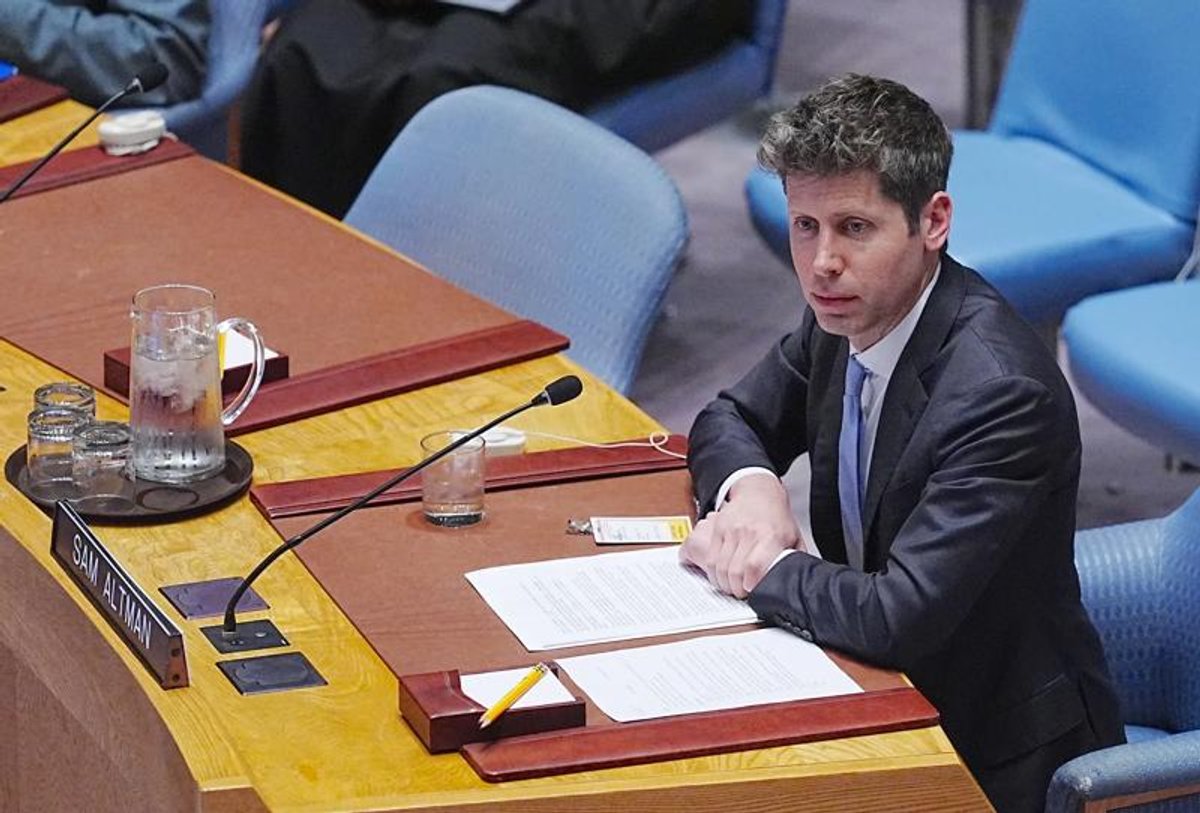
The breach follows a series of hacks by models owned by leading U.S. AI companies, including OpenAI, Anthropic, and Google. Earlier on Wednesday, U.S. tech leaders—including OpenAI CEO Sam Altman—addressed the UN Security Council, stressing their concerns over the pace of AI development. Illegally hacking a government platform to access records could prove a watershed moment for AI regulation, with Albanese saying the breach was “without precedent.”
Details are scant as to what kind of access and information the agents got. OpenAI did not immediately respond for comment. Albanese said no personal information was exposed in the incident.
Still, Veeraraghavan stresses that responsibility should rest solely on the AI companies making these agents: “OpenAI in this case should be held responsible, even if the ‘intent’ to divulge information may not be clear.”
In his briefing to reporters, Albanese expressed that Australia will take action to respond to the event: “There will obviously be legal consequences on it.” It’s not yet clear what those consequences will be, especially as this style of autonomous agent hacking has not been pursued in court yet.
It is perhaps a small relief that this happened to a close U.S. ally. “Australia wants OpenAI to be there, so they should be able to figure it out,” says Horowitz. But unless the AI labs can learn how to test their models without them escaping, they may not keep getting so lucky.
This is a developing story.