Diane Coyle: "In the end it will be people in general who benefit from artificial intelligence" - Agenda Pública
High confidence: full text extraction produced 1807 characters.
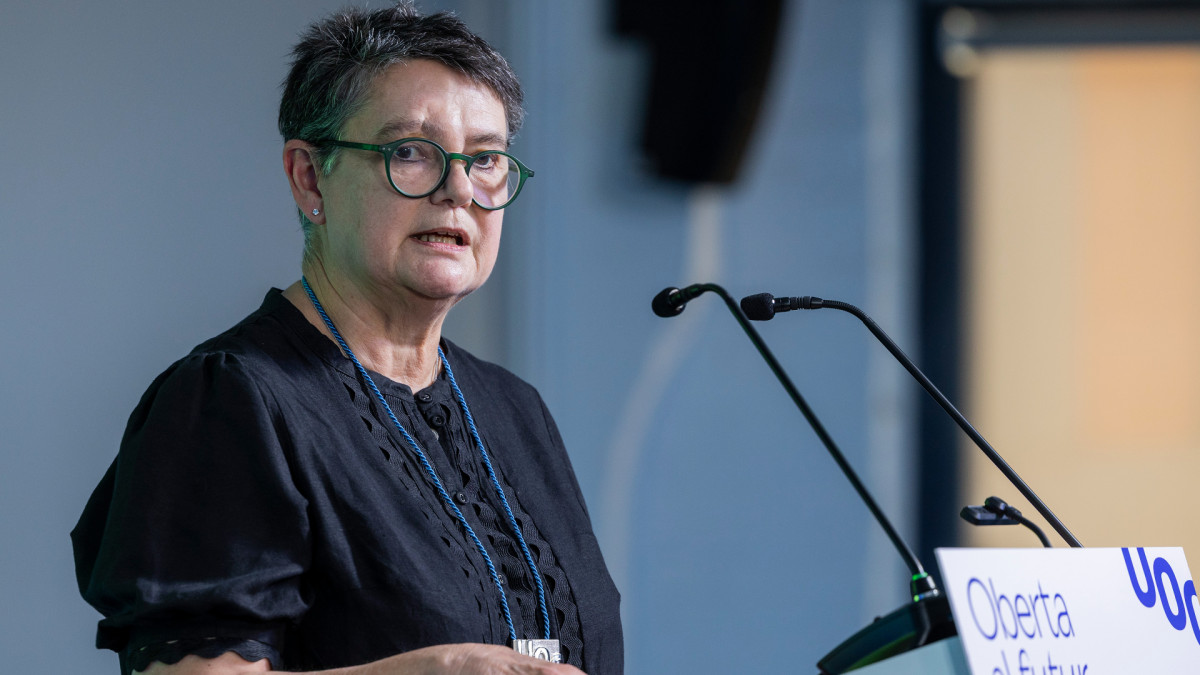
Last May, Coyle was awarded an honorary doctorate by the Universitat Oberta de Catalunya. Photo: UOC
"We need to see the kind of reorganisation of workflows and new kinds of business models that we saw in the late 2000s when digital platforms came along"If that's right, then in the next two or three years we should start seeing measurable macro-level productivity gains from AI. But that kind of organisational change is expensive, it's slow and people don't like it, so it always takes time. It's much slower to change institutions than to change the technology.
"Two friends of mine recently had to get probate for their parents' wills. One paid £12,000 using a lawyer, and the other got it for free using ChatGPT"All of those disruptive models did have impacts on real-world sectors of the economy. So I think we will see some of that kind of disruption. I don't myself think it will be a job apocalypse of the kind that some of the AI leaders have been talking about. I think they're exaggerating.
"If you think about why Airbnb or Uber did so well, it's because there was regulatory arbitrage. Taxi markets were highly regulated and expensive"There are also things like the cost of laying off workers. Obviously, we want to protect people, but the costs are excessive in some countries. It varies quite a lot. In Scandinavia, that's not the case at all, and they are the most dynamic and high-tech economies in Europe.
"It's not a bad thing to import services from other countries if you have services of your own that you can export"European countries therefore need to think about what advantages they have. An obvious one is data and applications. Actually, this has been the Chinese path as well. They have concentrated at least as much on applications of AI as on the frontier models themselves.