“AI tools will not replace doctors, but they will save us work” - calcalistech.com
High confidence: full text extraction produced 6365 characters.
“AI tools will not replace doctors, but they will save us work”
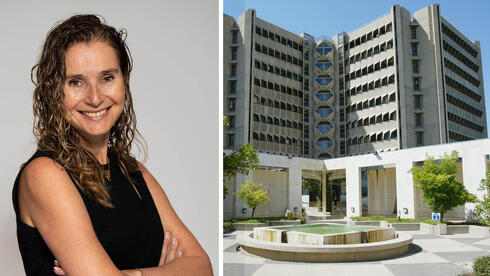
Prof. Anat Gafter-Gvili, incoming head of Tel Aviv University’s medical school, says artificial intelligence will force medical schools to rethink training, reduce reliance on memorization, and prepare physicians for a changing profession.
For more than a century, medical education has been built around one central idea: doctors must accumulate vast amounts of knowledge before they can treat patients. But the rise of artificial intelligence is forcing medical schools to reconsider what future physicians actually need to learn. Prof. Anat Gafter-Gvili, the incoming head of Tel Aviv University’s medical school and the director of the Department of Internal Medicine at Rabin Medical Center (Beilinson Hospital), believes the next generation of doctors will need less memorization and more critical thinking, and that Israel’s lengthy medical training system must change.
"Being head of a medical school means being responsible for educating the next generation of physicians, and there is no greater mission than that. Medicine has a holy trinity: providing the most professional care, teaching, and research. Being a good doctor means doing all three well. It is exciting because I will be heading the medical school where I studied as a student, and today my daughter is also studying at Tel Aviv University."
So you can fix everything you didn't like. What do you dream of changing for her generation and for the doctors who come after her?
"One of the significant things we want is to shorten the sixth year of medical school because, in our opinion, the training track is far too long. At the moment, we have encountered difficulties with the Council for Higher Education (CHE) and the Planning and Budgeting Committee (PBC), so we have not yet succeeded. Today, the path is medical school, followed by internship, and then residency. By the time you become a specialist, 10 years have passed. We need to find a way to shorten this process and make the training more focused."
It is unlikely that a doctor will spend 10 years in training without working.
"Within those 10 years, you are already working as a doctor and receiving a salary, but we definitely need to think about how to shorten the duration of training. We have already introduced changes, such as moving from only frontal teaching to online learning where appropriate. We are also trying to introduce content about the use of AI tools into the curriculum, so we can train better doctors faster."
What does this mean in practice?
"Being a doctor in this era is a challenge. AI tools will not replace doctors, but they will save us time in certain areas and provide valuable insights. Students need to learn how to use AI tools properly, and they already know them better than we do. Our role is to integrate AI into medical education and teach future doctors how to use these tools responsibly and with proper oversight."
Is it somewhat disconnected from reality to continue teaching medicine the way it was taught in the past, in the age of AI?
"The field of AI requires us to rethink what is important to teach doctors. We want to move away from memorizing information and rote learning toward knowing how to find information and use it critically. We also need to harness AI to improve learning and perhaps shorten medical studies.
"Medical education has different layers of knowledge. There is foundational knowledge that every doctor must understand, you cannot study a disease without understanding the basic mechanisms behind it. But we need to find new ways to teach this material, rather than relying so heavily on memorization. The current degree still places a very large emphasis on memorization."
You are essentially saying this is a test of whether the Council for Higher Education and the Planning and Budgeting Committee can recognize reality and find compromises.
"Very much so."
Your appointment is also a kind of recognition for choosing a field where there is less opportunity for private practice?
"I am actually a proud internist (and also a hematologist). In 2015, I became head of Internal Medicine Department A at Beilinson, and in my opinion, internal medicine is the queen of medicine because of the breadth of knowledge it requires.
"Internal medicine departments hold hospitals together, during routine periods, wars, and epidemics. Every hospital has several such departments. The most challenging and interesting patients, from my perspective, are in internal medicine. I have never felt that I compromised by choosing this path."
Because many of your colleagues become wealthy through private practice.
"People who choose medicine because they want to become wealthy are making the wrong choice. But you can live well as a doctor, and unlike some other professions, medicine is a career in which you can build a family life. There are unexpected calls and demanding hours, but you learn to balance it with life. You can have children and raise them without them feeling that you were not present enough.
"My career has not prevented me from having a family life."
Medicine is an internationally sought-after profession, and Israel has experienced significant waves of doctors leaving in recent years.
"The number of medical students in Israel is constantly increasing. This year, Tel Aviv University will have 400 medical students, significantly more than in the past. This reflects the state's and the Ministry of Health's desire to train more doctors.
"At the same time, under the Yatziv reform, graduates of institutions that do not meet the required criteria, including certain medical schools abroad, will not be able to work in Israel.
"The shortage of doctors has also led to the opening of more medical schools in Israel. Instead of four, there are now nine. I hope this will prevent Israelis from having to study abroad, discover that life there is better, and decide to stay.
"We lost doctors who left Israel during the judicial reform protests and during the war. We must do everything possible to encourage people to study here because those who study abroad sometimes do not return.
"Israeli doctors who work abroad are highly sought after, and that is a great source of pride. But we must make sure that future generations can study here, and receive the best possible education."