Fabrication and characterization of biocompatible BPC-157 based chitosan hydrogel - Springer Nature Link
High confidence: full text extraction produced 10785 characters.
Abstract
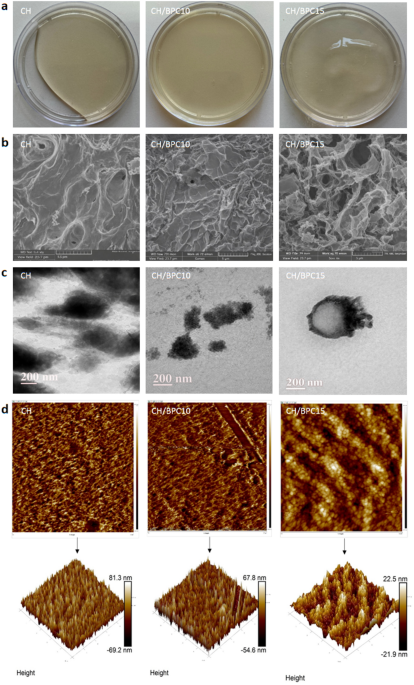
Multifunctional hydrogels are essential for advanced biomedical applications. In this study, CH/BPC composite hydrogel was fabricated and characterized for their physicochemical properties. The formulation exhibited a porous structure, analyzed through scanning electron microscopy (SEM) and transmission electron microscopy (TEM). Fourier-transform infrared spectroscopy (FTIR) showed the presence of hydrogen bond between BPC-157 peptide and chitosan backbone, indicating successful peptide incorporation within the hydrogel matrix. The composite hydrogel exhibited a balanced water vapor transmission rate (2,270 ± 35 g/m2 /day), along with remarkable properties of injectability, self-healing capability, and adhesiveness. Furthermore, the hydrogel demonstrated excellent encapsulation (98.9 ± 0.8%) of BPC-157, with release profile of 81.2 ± 2.9% within 24 h. In addition, the CH/BPC hydrogel demonstrated potent antibacterial efficacy, achieving up to 45.9% (Escherichia coli) and 65.0% (Staphylococcus aureus) inhibition. The fabricated hydrogel also showed a hemolysis rate of less than 5%, indicating acceptable hemocompatibility. Collectively, these findings indicate that CH/BPC hydrogel possesses desirable physicochemical and antibacterial characteristics, highlighting their potential as multifunctional hydrogel for future biomedical applications.
Data availability
The datasets generated during and/or analyzed during the current study are available from the corresponding author on reasonable request.
References
- Ali YS, Shaw I, Nie C et al (2026) Microfluidics-engineered mannitol- stabilized solid lipid nanoparticle hydrogel for enhanced topical delivery of apremilast in psoriasis therapy. Chem Eng J Adv. https://doi.org/10.1016/j.ceja.2026.101155
- Ardean C, Davidescu CM, Nemeş NS et al (2021) Factors influencing the antibacterial activity of chitosan and chitosan modified by functionalization. Int J Mol Sci 22:7449. https://doi.org/10.3390/ijms22147449
- Arunim, Sarita, Mishra R, Bajpai S (2024) Natural biopolymer-based hydrogels: an advanced material for diabetic wound healing. Diabetol Int 15:719–731. https://doi.org/10.1007/s13340-024-00737-2
- Atkinson JP, McGinnis K, Shreffler D (1980) Development and characterization of a hemolytic assay for mouse C4. J Immunol Methods 33:351–368. https://doi.org/10.1016/0022-1759(80)90005-8
- Babakhani A, Peighambardoust SJ, Ghahremani-Nasab M, Peighambardoust NS (2025) Fabrication of biodegradable nanocomposite scaffolds with hydroxyapatite, magnetic clay, and graphene oxide for bone tissue engineering. Sci Rep 15:1–27. https://doi.org/10.1038/s41598-025-07270-5
- Bahadoran M, Shamloo A, Nokoorani YD (2020) Development of a polyvinyl alcohol / sodium alginate hydrogel-based scaffold incorporating bFGF- encapsulated microspheres for accelerated wound healing. Sci Rep. https://doi.org/10.1038/s41598-020-64480-9
- Balakrishnan B, Mohanty M, Pr U, Athipettah J (2005) Evaluation of an in situ forming hydrogel wound dressing based on oxidized alginate and gelatin evaluation of an in situ forming hydrogel wound dressing based on oxidized alginate and gelatin. Biomaterials. https://doi.org/10.1016/j.biomaterials.2005.04.012
- Cerovecki T, Bojanic I, Brcic L et al (2010) Pentadecapeptide BPC 157 (PL 14736) improves ligament healing in the rat. J Orthop Res 28:1155–1161. https://doi.org/10.1002/jor.21107
- Chung CK, Fransen MF, van der Maaden K et al (2020) Thermosensitive hydrogels as sustained drug delivery system for CTLA-4 checkpoint blocking antibodies. J Control Release 323:1–11. https://doi.org/10.1016/j.jconrel.2020.03.050
- Dabbaghi M, Namjoshi S, Panchal B et al (2021) Viscoelastic and deformation characteristics of structurally different commercial topical systems. Pharmaceutics 13:1–11
- Falcone M, Meier JJ, Marini MG et al (2021) Diabetes and acute bacterial skin and skin structure infections. Diabetes Res Clin Pract. https://doi.org/10.1016/j.diabres.2021.108732
- Gojkovic S, Krezic I, Vranes H et al (2021) Bpc 157 therapy and the permanent occlusion of the superior sagittal sinus in rat: Vascular recruitment. Biomedicines. https://doi.org/10.3390/biomedicines9070744
- Gola A, Knysak T, Mucha I, Musiał W (2023) Synthesis, thermogravimetric analysis, and kinetic study of poly-N-isopropylacrylamide with varied initiator content. Polymers (Basel). https://doi.org/10.3390/polym15112427
- Gonciarz W, Balcerczak E, Brzeziński M et al (2025) Chitosan—based formulations for therapeutic applications. A recent overview. J Biomed Sci 32:1–44
- Gounden V, Singh M (2024) Hydrogels and wound healing: current and future prospects. Gels. https://doi.org/10.3390/gels10010043
- Helander IM, Nurmiaho-Lassila EL, Ahvenainen R et al (2001) Chitosan disrupts the barrier properties of the outer membrane of Gram-negative bacteria. Int J Food Microbiol 71:235–244. https://doi.org/10.1016/S0168-1605(01)00609-2
- Hernandez JL, Woodrow KA (2022) Medical applications of porous biomaterials: features of porosity and tissue-specific implications for biocompatibility. Adv Healthc Mater. https://doi.org/10.1002/adhm.202102087
- Ionescu OM, Mignon A, Iacob AT et al (2021) New hyaluronic acid/polyethylene oxide-based electrospun biological evaluation. Polymers (Basel) 13:1291
- Koosha M, Hamedi S (2019) Intelligent chitosan/PVA nanocomposite films containing black carrot anthocyanin and bentonite nanoclays with improved mechanical, thermal and antibacterial properties. Prog Org Coatings 127:338–347. https://doi.org/10.1016/j.porgcoat.2018.11.028
- Li S, Yu Q, Li H et al (2023) Self-assembled peptide hydrogels in regenerative medicine. Gels 9:1–17. https://doi.org/10.3390/gels9080653
- Li Y, Tang X, Liu Y et al (2025) Advanced wound healing with chitosan hydrogels incorporating metabolites from whale-derived Lactiplantibacillus plantarum HJ-S2. Front Mater. https://doi.org/10.3389/fmats.2025.1573222
- Ndlovu SP, Motaung KSCM, Razwinani M et al (2024) Capparis sepiaria-loaded sodium alginate single- and double-layer membrane composites for wound healing. Pharmaceutics. https://doi.org/10.3390/pharmaceutics16101313
- Nešović K, Janković A, Radetić T et al (2019) Chitosan-based hydrogel wound dressings with electrochemically incorporated silver nanoparticles – in vitro study. Eur Polym J 121:109257. https://doi.org/10.1016/j.eurpolymj.2019.109257
- Ng JY, Zhu X, Mukherjee D et al (2021) Pristine gellan gum-collagen interpenetrating network hydrogels as mechanically enhanced anti-inflammatory biologic wound dressings for burn wound therapy. ACS Appl Bio Mater 4:1470–1482. https://doi.org/10.1021/acsabm.0c01363
- Palanivelu SD, Gan S, Salleh KM et al (2023) Assessment of bio-based hydrogel as an alternative growth medium for seed germination and seedling growth in urban farming. Cellulose 30:7791–7803. https://doi.org/10.1007/s10570-023-05334-1
- Panda DS, Eid HM, Elkomy MH et al (2021) Berberine encapsulated lecithin–chitosan nanoparticles as innovative wound healing agent in type II diabetes. Pharmaceutics 13:1–21. https://doi.org/10.3390/pharmaceutics13081197
- Pereira HM, Freitas RB, Maciel MJ et al (2024) The chick chorioallantoic membrane assay as an in vivo model for colon tumor analysis with optical coherence tomography. Expert Syst Appl 255:1–9. https://doi.org/10.1016/j.eswa.2024.124611
- Arunim, Sarita, Mishra R, Bajpai S (2024) Development and characterization of carbopol-based hydrogel as diabetic wound dressing materials. Diabetol Int. 15(4):719-731. https://doi.org/10.1007/s13340-024-00737-2
- Sun L, Guo Z, Qin W et al (2026) Cationic hydrogel with sustained lubrication and anti-calcification for osteoarthritis therapy. J Nanobiotechnol. https://doi.org/10.1186/s12951-026-04164-0
- Udovicic M, Sever M, Kavur L et al (2021) Stable gastric pentadecapeptide BPC 157 therapy for monocrotaline-induced pulmonary hypertension in rats leads to prevention and reversal. Biomedicines 9:1–17. https://doi.org/10.3390/biomedicines9070822
- Vishal Gupta N, Shivakumar HG (2012) Investigation of swelling behavior and mechanical properties of a pH-Sensitive superporous hydrogel composite. Iran J Pharm Res 11:481–493
- Wang S, McClements DJ, Lan Q et al (2025) Fabrication of composite hydrogels by sonication-assisted assembly of okara cellulose nanofibers and guar gum: unraveling structure, properties, and tofu quality enhancement. Lwt 229:118222. https://doi.org/10.1016/j.lwt.2025.118222
- Wei X, Ma K, Cheng Y et al (2020) Adhesive, conductive, self-healing, and antibacterial hydrogel based on chitosan-polyoxometalate complexes for wearable strain sensor. ACS Appl Polym Mater 2:2541–2549. https://doi.org/10.1021/acsapm.0c00150
- Wu C, Jiang H, Zhang Q (2025) A multifunctional hydrogel with hemostatic and photothermal properties for burn repair. RSC Adv. https://doi.org/10.1039/d5ra03968a
- Yadav H, Malviya R, Kaushik N (2024) Chitosan in biomedicine: a comprehensive review of recent developments. Carbohydr Polym Technol Appl 8:100551. https://doi.org/10.1016/j.carpta.2024.100551
Funding
No funding was obtained for this study.
Author information
Authors and Affiliations
Contributions
A. wrote the original draft and was responsible for formal analysis, investigation, and methodology. M.D. and M.S. contributed to the conceptualization of the study. S. performed re-analysis of the data in the revised manuscript. R.K. was responsible for editing. S.G. contributed to the analysis. S.B. was responsible for data curation. All authors read and approved the final manuscript.
Corresponding author
Ethics declarations
Conflict of interest
The authors report no conflict of interest.
Ethical approval
All animal-related procedures were conducted in accordance with the institutional ethical guidelines for the care and use of laboratory animals, following approval from the Institutional Animal Ethics Committee (IAEC) of Banasthali Vidyapith, Rajasthan, under approval number BV/IAEC/September2023/10.
Clinical trial number
Not applicable.
Rights and permissions
Springer Nature or its licensor (e.g. a society or other partner) holds exclusive rights to this article under a publishing agreement with the author(s) or other rightsholder(s); author self-archiving of the accepted manuscript version of this article is solely governed by the terms of such publishing agreement and applicable law.
About this article
Cite this article
Arunim, Dagar, M., Solanki, M. et al. Fabrication and characterization of biocompatible BPC-157 based chitosan hydrogel. 3 Biotech 16, 312 (2026). https://doi.org/10.1007/s13205-026-04951-4
- Received:
- Accepted:
- Published:
- Version of record:
- DOI: https://doi.org/10.1007/s13205-026-04951-4