Gray Market Peptides: So Much Hype, So Little Data - Medscape
High confidence: full text extraction produced 11993 characters.
Christopher Mendias, PhD, gets four or five patient questions daily about peptides at his sports medicine practice in Phoenix, Arizona.
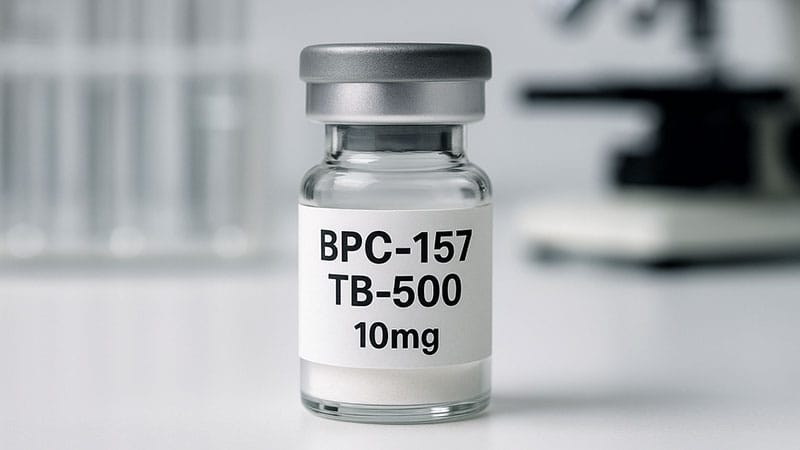
BPC-157 is the most popular. That’s because thousands of people are buying “research grade” compounds such as BPC-157 on the gray market and injecting them amid social media claims of healing wounds and injuries, boosting strength, relieving chronic pain, and the biggest promise of all: longevity.
He tells patients the studies on BPC-157 are “fairly compelling studies in small animals, but there are zero rigorous clinical trials” and usually he adds that the couple small human case series “for most journals would not be rigorous enough for acceptance.”
Mendias doesn’t go into the fact that most BPC-157 research has come from one group, whose findings show “a positive effect on everything it’s ever been studied in. With any rat or mouse model that you can imagine, [they studied] muscle injuries, fractures, osteoarthritis, concussion, GI [gastrointestinal] disorders, wounds, everything under the sun, and this molecule seems to be helpful” for all of those things, he said.
If that’s not a red flag, it’s at least a yellow one, said Mendias, a licensed athletic trainer and a former associate professor of orthopedic surgery and physiology at the University of Michigan and at Weill Cornell Medicine. He’s also lead author of a recent review of the safety and efficacy of gray market peptides, published in Sports Medicine.
Why Peptides Are Suddenly Everywhere
BPC-157 is among a handful of social media-influenced peptides with less than rigorous safety data and little to no human data that the FDA is considering deregulating. In July, the Pharmacy Compounding Advisory Committee will consider adding seven peptides to the 503A bulks List, making it possible for patients to acquire them from compounding pharmacies with a prescription. The committee will consider five other peptides in a meeting that the FDA says will occur before February 2027.
US Department of Health and Human Services Secretary Robert F. Kennedy, Jr, told podcaster Joe Rogan he has used peptides to heal injuries, and Rogan said he uses BPC-157 in combination with a peptide called TB-500 (also on the FDA deregulation list) for healing. The combination is known as “the Wolverine stack.”
The potential of peptides beyond GLP-1s for therapeutics is undeniable. Even the National Aeronautics and Space Administration (NASA) is looking at one on the deregulation list — emideltide — as a candidate for astropharmacy to help induce deep sleep.
But adding these peptides to the 503A bulk list would present some very complicated and new questions for physicians. For example, how would the substances be considered if they were involved in a medical review process, since there is no prescribing information? And how would adverse effects be reported?
About the Peptides the Popular Kids Are Hyping
Most of the social media peptides are extremely small molecules. BPC-157 is a chain of 15 amino acids, and TB-500 is a synthetic 7-amino acid peptide fragment of thymosin beta-4 protein that is present in almost all mammalian cells, explained Maliha Zahid, MBBS, PhD, a noninvasive cardiologist who studies cardiac and lung targeting peptides at the Mayo Clinic in Rochester, Minnesota.
Their size and simplicity mean they’re cheap and easy to make.
It can be done “without a whole lot of skill,” said Phil Dawson, PhD, a professor of chemistry at Scripps Research in La Jolla, California, who is a former president of the American Peptide Society and board chair of the Peptide Therapeutics Foundation.
“That’s one of the reasons why they’re everywhere.,” said Dawson. “You can order one up, say ‘send me this,’ and you’ll get a little white powder, and that may or may not be that peptide. And then you can start doing things with it, whether it’s research or injecting it into yourself or loved ones.”
He calls the term “research grade” a euphemism.
In its meeting notice, the FDA listed these as the “uses evaluated”:
- BPC-157: ulcerative colitis
- TB-500: wound healing
- KPV: wound healing and inflammatory conditions
- Emideltide: opioid withdrawal, chronic insomnia, and narcolepsy
- Semax: cerebral ischemia, migraine, and trigeminal neuralgia
- Epitalon: insomnia
- MOTS-c: obesity and osteoporosis
Pinchas Cohen, MD, who discovered MOTS-c, said it hasn’t been studied for osteoporosis, but there were some bone density findings in mice. When mice are given MOTS-c, they don’t gain as much weight on a high-fat diet and they maintain muscle mass, run better on a treadmill, and are less likely to have muscle atrophy.
A phase 1B trial involving 20 people showed MOTS-c was safe, but the project didn’t move forward “because to get the kind of response that we wanted — that was clear and substantial — it needed to be given at least daily, maybe twice a day, at a pretty large volume, and it was clear that that’s not going to be a way to develop a drug,” said Cohen, a professor of gerontology, medicine, and biological sciences and dean of USC Leonard Davis School of Gerontology in Los Angeles.
They’re working now to develop a slow-release weekly version of MOTS-c. Cohen is also trying to raise the $100 million needed for clinical trials. He has other longevity peptides in development, including one that is a candidate for preventing the development of Alzheimer’s disease in people who have an APOE4 genetic risk factor.
“The whole culture that we’re living in — particularly under RFK Jr — is also driven by the masses of people who want these kinds of things and who want to abandon the cautious, careful, responsible approach to developing therapeutics. It’s a new culture,” Cohen said.
He also voiced concern about members of the advisory committee that will review the peptides (the committee is not fully staffed, so appointments are expected). The current members “are all pharmacists,” Cohen noted, adding, “I don’t want to disrespect them, but they’re not physicians. They understand compounding. But to decide that something is good enough to start giving away, there should be doctors and drug development experts.”
Cohen has testified before the FDA multiple times as an expert on other drugs, including human growth hormone. No one has asked him to present on MOTS-c so far, and if they did, he said he would advise against it and instead appeal for researching funding and accelerated clinical trials.
What to Tell Patients About Peptides
When patients ask Mendias about peptides, he focuses on safety data and treats it like an illicit drug use conversation, eventually moving to a gentle “follow-the-money” discussion.
Patients immediately shut down if you simply tell them peptides are bad. “So I just stick to the science and say, here’s what we know, here’s what we don’t know. And we don’t prescribe them in our practice. We follow the law quite closely and we don’t prescribe unapproved peptides,” Mendias said.
For patients who use gray market peptides anyway, he tells them: “If you choose to use them and something happens that you need help with, come see us. We’re not going to judge you for it.”
Two patients in Mendias’s practice were taking a peptide known as PT-141, which is the synthetic peptide bremelanotide that has been FDA-approved for hypoactive premenopausal sexual desire disorder in premenopausal women (marketed under the brand name Vyleesi). It’s been highlighted on social media for men who are nonresponders to phosphodiesterase 5 inhibitors for erectile dysfunction.
“Both of these patients were in their late 20s, fairly fit with less than 10% body fat, in the gym 5 days a week, busy careers, and had read about how PT-141 helped with erectile function and desire,” Mendias said. “They were using it as an adjunct if they had a long week or just a really long busy day and they weren’t as aroused or firm as they perhaps would be because they’re exhausted.”
Within a day, they each experienced erectile dysfunction and one experienced what Mendias described as “crushing depression” that was difficult to recover from. Both also experienced patchy skin lightening. They’d purchased the peptide from the same gray market source.
“Both of them were so hesitant to say anything about it because people were talking about it and said on Reddit how amazing this was and so they thought [the side effects] had to be from something else,” Mendias said.
Another patient — late 20s, fairly fit — reached out to the practice after noticing blood in his urine. Mendias ran lab tests, and the patient’s kidney function and urinalysis were normal. They talked through other potential causes, and the patient said his workout regimen was unchanged. Mendias asked if he’d started any new medications.
“I did start taking BPC-157 about a week before this, but there’s no way that could be the cause because it promotes healing. If anything, this should help my kidneys if I’m peeing blood,” Mendias recalled the patient saying.
He stopped taking BPC-157 and 4 or 5 days later, the blood was gone and hadn’t returned.
“He was so hesitant to bring it up or even associate the potential idea that this could cause harm,” Mendias said. “There’s this culture of not reporting that has been set up because of expectations from social media.”
Yeah, About the Whole Social Media Thing…
At publication time 47 people had left comments on the public forum at the FDA agenda website, most from people saying peptides have been miracle cures for them.
“What’s fascinating to me,” said Mendias, “is a lot of the same patients that talk about peptides are so concerned with PFAS [per- and polyfluoroalkyl substances] and BPA [bisphenol A] in their water and all their impurities…and they are living a ‘my body is a temple’ lifestyle, but are really interested in this random peptide that has no safety data and very little purity data plus no contamination data, and they want to put it in their bodies. That’s a testament to how impactful the power of social media is.”
He says all that hype has created the perfect conditions for placebo and contextual effects, he said.
In Mendias’ latest research, which was just published as a preprint but isn’t peer-reviewed, an estimated 40%-75% of gray market peptides “don’t pass the very basic two out of 12 safety standards that you would have for a peptide drug that you would pick up at Walgreens,” he said. About 15% of samples from the publicly available dataset Mendias used had measurable endotoxin contamination.
Adding peptides to the FDA bulk list has been suggested as improving safety for people using gray market compounds. Cohen doesn’t think that argument is valid, and Mendias worries it could just fuel more use by being seen as a de facto approval.
“Even if they got some of these produced by reputable compounders in the US, the same sources will likely persist, because Chinese producers are less than half the price,” Cohen said. “All my research agents come from China.”
Cohen, Dawson, and Zahid said that they hope the spotlight on peptides fuels more research investment to bring new, rigorously researched candidates forward.
“With the commercialization of weight-loss drugs that are injectable peptides, there is a lot of hope and enthusiasm for expanding application of these peptides, from antibacterial actions to nonviral vectors,” Zahid said. “However, a lot of work remains to be done, and ultimately FDA approval is the stamp I would look for before using any peptide in any of my patients.”
Dawson is named on several peptide science patents; is founder of LyfeIQ.com; and is on the scientific advisory board of Vilya Therapeutics, Dextera Biosciences, and Novapep. Cohen holds a patent for MOTS-c as well as other peptides and is a founder of CohBar Inc. and MyoMito Therapeutics. Zahid holds a patent on cardiac targeting peptides with the University of Pittsburgh. Disclosure information for study authors is available in the original study publications.